Submissions due 25 August, 16:0025 August 2026 · kl 08–20A House, Stadsgården 6, SlussenInvite only
Building the Future of Finance. With Banks.
Embedded Finance Build Day is the first Nordic industry-wide bank hackathon, in Stockholm on 25 August 2026. One day, real banking APIs from Open Payments and Zwapgrid, real mentors from Danske Bank, Worldline and Froda, and something built by evening. Over 60 people from our bank and technical partners will be in the room with you, at your table, not on a stage.
Submissions due Tuesday 25 August, 16:00Eight teams are selected to present at 17:00
Where to submit your build
One form for every team. Your build uses both Open Payments and Zwapgrid, so a single submission reaches both partner teams and the full jury. One submission per team.
The submission form
Submit your build
Include a working demo link or repo, one sentence on the problem you took on, and your team name. Every submission goes to the whole jury, and to the Open Payments and Zwapgrid engineering teams.
Five researched problems, with the sources behind them.
The packet holds the full problem set, the primary Nordic regulatory and market sources each one is built on, and brainstorming prompts to get a team moving in the first twenty minutes. Read it before the day if you can.
None of it is required. Arrive with your own idea and build that instead. This exists so nobody spends the first two hours staring at a blank file.
Every build uses both. Create your accounts and test the connections before 25 August. Both teams have engineers on the floor all day, so bring the questions you could not answer at your desk.
Open Payments
Open banking APIs for account data and payment initiation across Nordic and European institutions. Rasmus Brenter and the Open Payments engineering team are on site throughout the day.
ERP and financial system connectivity through one interface. The accounting side of the picture, and the place most of the messy real-world data actually lives.
submissions close on 25 August, then demos at 17:00
60+
people from our bank and technical partners in the room
12h
from breakfast mingle to demos, jury and dinner
You leave most fintech events with business cards. You leave this one with a prototype and shared ideas.
Stockholm has no shortage of fintech events. Panels, keynotes, coffee, business cards. Build Day inverts that. The people who usually speak from stages sit at your table instead. Engineers and product leads bring their APIs, their sandboxes and their whole day. You bring a laptop and a working brain.
The problems in this industry are not hard because nobody is clever enough. They are hard because the people who understand financial data and the people who own commercial decisions have never been in the same room. For twelve hours on 25 August, they are.
You are placed on a mixed team, with people from across the industry.
Teams are assigned, not self-selected, so you spend the day building with people from other fintechs, other banks and other disciplines rather than the colleagues you already sit next to. Everyone works the same problem set, everyone demos, and the ideas stay in the room to be shared. We are here to support innovation and to support you.
The jury
Eight people evaluating and improving the work.
CTOs, CEOs and open banking leads from across the Nordic ecosystem. They read every submission, watch the demos at 17:00, give each selected team direct feedback at 19:00, and choose the winner.
Dan Hyyrynen
CTO, Froda
Ola Hjort
Head of Technology and Engineering for Digital Services, Worldline
Christie H. Kristensen
Partnerships Manager for Open Banking, Danske Bank
Louise Brandt
CEO, Open Payments
Leo Berghald
CEO & Founder, Zwapgrid
Mats Persson
CEO, Zinova
Rebecca Koskinen
CEO Sweden, Stack By Me
Charles Arvidsson
CEO, AI Nordics
What you could build
Building the future of finance together, to solve real problems.
Each of these is written up in full, with sources and brainstorming prompts, in the inspiration packet. You are not required to use any of it. Arrive with your own idea and build that instead.
Problem 01 · Data fragmentation
The data arrives incomplete, inconsistent, or not at all
PSD2 mandated access. It never mandated standardisation. Around 4,491 European financial institutions each expose their own implementation, authentication flow and data shape. One bank returns the account holder name on roughly 81 percent of personal accounts, so about one in five comes back nameless. A Swedish company banking across three institutions still cannot get a reliable consolidated view of its own money.
Problem 02 · Authentication
Every product built on account data has a scheduled failure inside it
Consent has to be renewed on a clock, and on renewal day a meaningful share of customers simply do not come back. Reported drop-off has run above 50 percent in some businesses. What does renewal look like as a designed moment rather than an error state? And who re-authenticates when the account has three signatories and the person who set up the connection has left the company?
Problem 03 · Invoicing and fraud
Every control works exactly as designed, and the money is gone
Brå recorded 232,862 reported fraud offences in Sweden during 2025. A finance assistant pays a supplier she has paid thirty times before. Same logo, same layout, correct amount, correct reference. One field changed: the bank account number. Then there is the invoice that does not exist, and the receivable financed twice by two financiers looking at the same document.
Problem 04 · Sales and marketing
What if sales teams understood their customers through financial data?
Reps qualify prospects on a scraped headcount, a funding press release and a job title that was true eighteen months ago. Meanwhile the filings are published openly by the Swedish state. A qualification score built from actual financials. Trigger detection from filings. A churn signal from payment behaviour. A tool that tells a rep not to call.
Problem 05 · Financial decisions
820,000 Swedish limited companies, and the overwhelming majority have no finance function at all
The person deciding whether to hire, whether to take an order that requires buying stock, whether to pay a supplier now or in three weeks, is the same person doing the selling and the delivering. Their financial picture arrives weeks late, in a format designed to satisfy Skatteverket rather than to help anyone decide anything. In 2025, 10,731 Swedish companies went bankrupt, affecting 24,882 employees, and roughly one in four bankruptcies across the EU is attributed to unpaid invoices. Build decision support instead of reporting. Predict who pays late. Write the skattekonto as one plain sentence.
The talks
Lunch talks from industry leaders
Short sessions over lunch from the people whose infrastructure you are building on. Then straight back to your table.
Froda
SME lending infrastructure. What credit decisions actually need from data, and where the gaps are.
Worldline and the AI Café
How Worldline's teams put AI into practice internally, from their AI Café format. Read about it here.
Danske Bank
Nordic banking at scale. The institutional view of what agents can and cannot touch, and why.
Stockholm Growth & Fintech
The research behind the problems in your packet, and what the numbers mean for the companies you would be selling to.
Partners
Building with our partners
Their teams mentor, their infrastructure powers the builds, and they are watching closely for the ideas and the people that stand out. If you have wanted a real conversation with these organizations, the kind that does not happen in a conference hallway, this is the format where it happens naturally. You will be solving a problem together by ten in the morning.
Danske Bank
Nordic banking at scale, and the institutional perspective on what agents can and cannot touch.
Worldline
Global payment services. The rails a large share of European transactions run on.
Froda
SME lending infrastructure. Credit and financing embedded where businesses already are.
Open Payments
Open banking APIs. Account data and payment initiation, ready to build on, with Rasmus Brenter and the Open Payments engineering team on site all day.
Zwapgrid
ERP and financial system connectivity. The accounting side of the picture, through one interface.
17:00Presentations. Eight teams are selected to present on stage
19:00The jury gives feedback and chooses the winner
20:00Doors close
Breakfast and dinner are included. Lunch options are available for purchase on site. Allergies to alexandra@alexandrastudio.se.
The venue
A House, Slussen
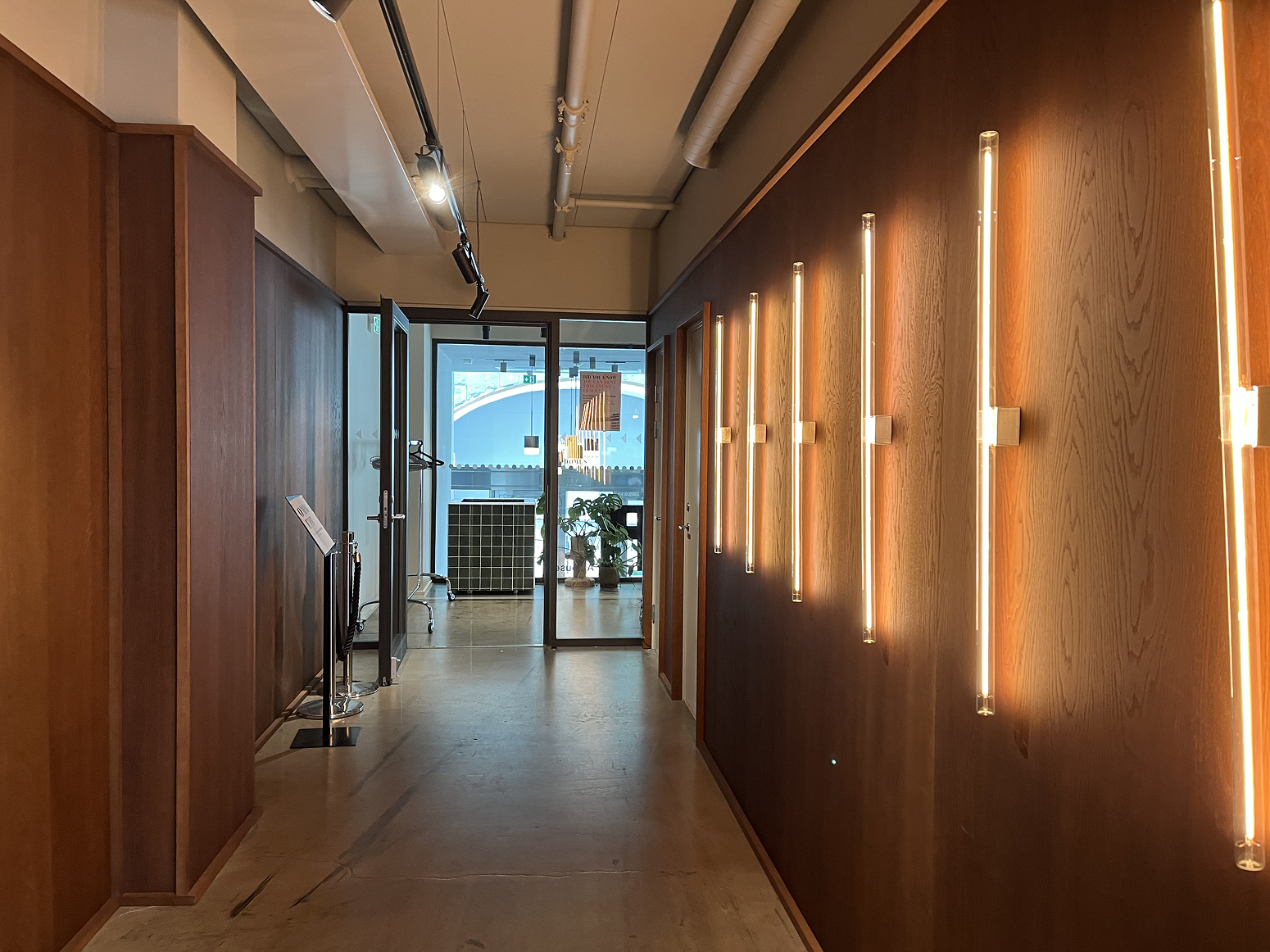
Stadsgården 6, right on the water at Slussen. Open floors, big tables, and a stage for the evening presentations. Five minutes from Slussen station.
What you take with you
A real problem solved
Not a hypothetical exercise. A working prototype against a problem that is costing Nordic companies money right now.
Relationships that started with work
The strongest professional relationships begin by building something together, not by exchanging LinkedIn requests.
A real read on embedded finance
You will understand the space the way practitioners do, because for one day you will be one.
A place in the ecosystem
Stockholm's fintech community is smaller than it looks. Show up, build well, and people remember.
Why people are coming
Not the reasons we would put in a brochure. The reasons people have actually given when they registered.
To meet the banks. Not a stand in a hallway, the teams who own the infrastructure
To be on a mixed team, building with people from the other fintechs in the room
Because a hands-on industry event does not exist here yet, and this is the first one
Because they saw who else was going
Invite only, for people working in fintech who already understand it. You do not need a team or an idea. You need a laptop and the day.
How the day runs
1
Meet your team
You are assigned a team and sent a team banner. Post it, tag your teammates, start a group.
2
Read the packet
Five problems with sources and prompts. Open the PDF and pick one, or bring your own idea.
3
Explore the APIs
Create accounts with Open Payments and Zwapgrid, try connecting, and bring your questions. Their engineers are on site.
4
Build, then submit
25 August at A House. Doors at eight, submissions at four, presentations at five.
Frequently asked questions
How do we submit our build?
By 16:00 on 25 August, through one submission form. Builds use both Open Payments and Zwapgrid, so a single submission reaches both partner teams and the whole jury. One submission per team.
What is in the inspiration packet?
Five researched problem areas, the primary Nordic regulatory and market sources behind each one, and brainstorming prompts. Open the PDF. Nothing in it is required, and teams are welcome to build their own idea.
Which APIs will teams build on?
Both. Open Payments for open banking account data and payment initiation, and Zwapgrid for ERP and financial system connectivity. Create accounts with both before the day and bring your questions. Rasmus Brenter and the Open Payments team, and the Zwapgrid engineers, are on site throughout.
Who is on the jury?
Dan Hyyrynen (Froda), Ola Hjort (Worldline), Christie H. Kristensen (Danske Bank), Louise Brandt (Open Payments), Leo Berghald (Zwapgrid), Mats Persson (Zinova), Rebecca Koskinen (Stack By Me) and Charles Arvidsson (AI Nordics). Eight teams present at 17:00 and the jury chooses a winner at 19:00.
What is Embedded Finance Build Day?
The first Nordic industry-wide finance hackathon, organised by Alexandra Grisanti, founder of Operator Network, under Alexandra Studio. The problem set comes from research published in her Stockholm Growth & Fintech newsletter.
Can I still register?
Registration is invite only, for people already working in fintech, banking and adjacent fields, and closes 21 August on Luma. You do not need a team or an idea, because teams are assigned as mixed groups across companies.
Submissions close 25 August, 16:00
Built something today? Get it in front of the jury.